

Cutting Kitchen Countertops: 5 Features a Machine Must Have for Perfect Results
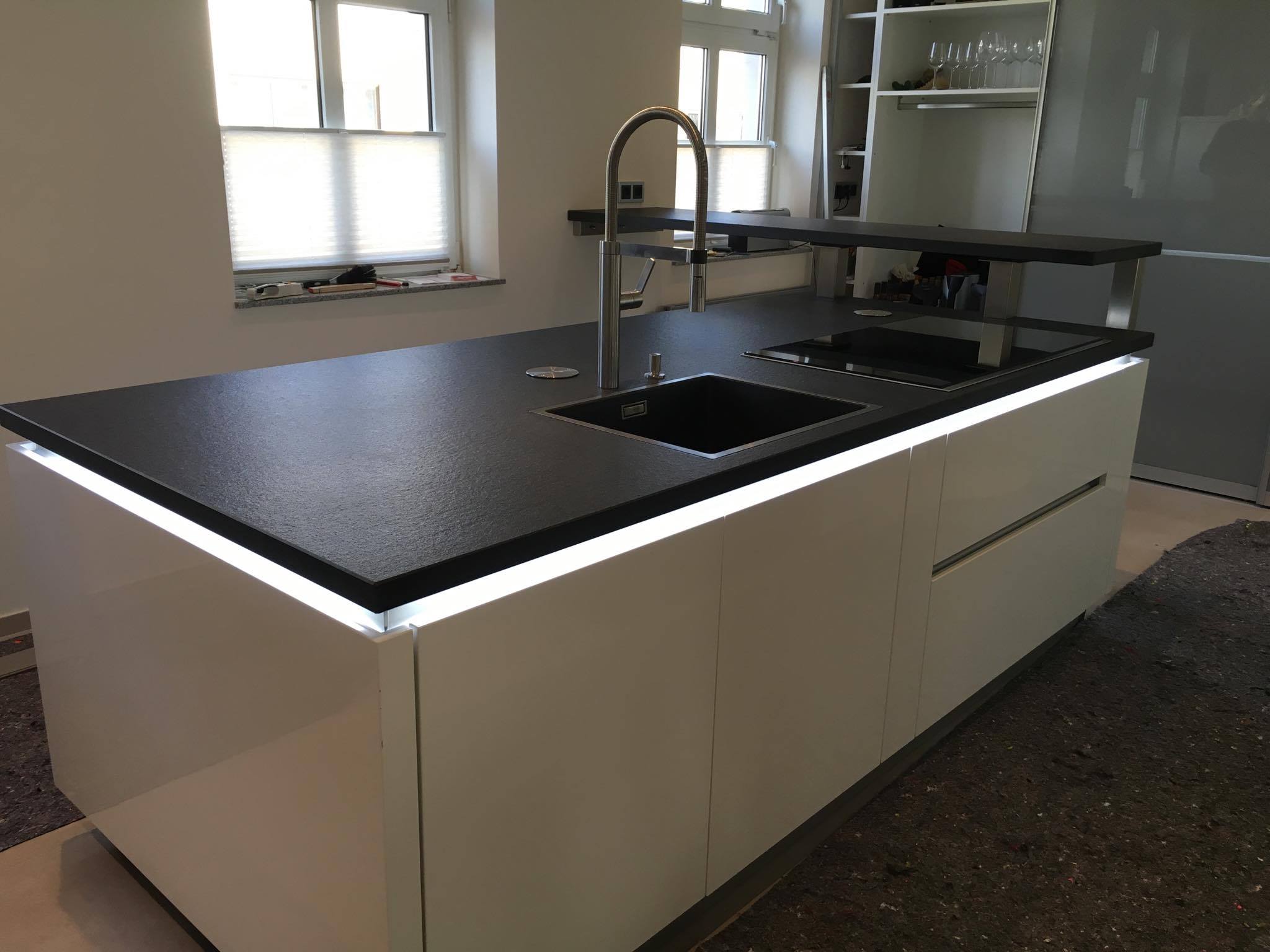
When it comes to millimeter-precise operations such as cutting kitchen countertops, maximum accuracy and surface quality are essential. Whether working with natural stone or engineered materials, selecting the right cutting machine is a key factor in achieving flawless results.
In this guide, we will analyze the most suitable machines for cutting kitchen countertops, the different processing techniques, and the materials that can be worked. The goal is to clearly identify the essential features a machine must have to guarantee professional-quality workmanship.
Cutting Kitchen Countertops: Which Machines to Use
In the kitchen countertop industry, stone is not the only material used, but it remains one of the most common and appreciated choices.
To cut and process stone and similar materials for kitchen countertops, several machine types are available, each offering specific advantages depending on the type of machining required and the material being processed.
Below are the main machines commonly used for cutting kitchen countertops.
Fixed Bridge Saws
Fixed bridge saws are ideal for straight cuts and large-format slabs. Their solid and stable structure ensures consistent geometric precision even on oversized materials.
They are perfect for linear cutting operations but generally require additional machines or tools to complete other processing stages.
CNC (Computer Numerical Control) Saws
CNC saws allow the execution of complex shapes, curved cuts, and precise holes. These machines are programmed through dedicated software and can perform fully automated machining cycles with minimal operator supervision, ensuring high repeatability and precision.
Polishers and Profilers
Once the rough cut is completed, edges and corners must be finished. Polishers and profilers are essential for achieving smooth, polished, or shaped edges, delivering kitchen countertops that are ready for installation.
Multifunctional Machines
Modern multifunctional machines combine cutting, drilling, profiling, and finishing in a single operating cycle. Often manually operated, they are ideal for workshops with small to medium production volumes that want full autonomy throughout the entire production process.
Types of Cutting: What Processes Are Required?
Cutting a kitchen countertop involves different types of machining depending on the desired final result.
The machine must support multiple processing operations, each with specific technical requirements.
The main types of kitchen countertop processing can be divided into three categories:
- Linear cutting: the most common operation, used for straight sections of countertops and wall cladding.
- Drilling, milling, and profiling: required for soft curves, rounded corners, and cut-outs for sinks, cooktops, faucets, and electrical outlets.
- Bevel cutting: used to create chamfered or beveled edges, often to achieve a precise angle between the countertop and the backsplash for both aesthetic and functional purposes.
All these operations demand high-precision machinery capable of maintaining tight tolerances and delivering chip-free, flawless surfaces.
Types of Materials for Kitchen Countertops
Not all kitchen countertops are the same. Materials differ in composition, hardness, and response to cutting processes.
An efficient cutting machine must be able to handle a wide range of materials, including:
- Natural stone: each stone requires a specific machining approach. Granite is extremely hard and durable, while marble is softer and more delicate, yet remains a timeless and elegant choice.
- Quartz composites: engineered materials with uniform density and high resistance, available in many colors and surface finishes.
- Ceramic and porcelain stoneware: highly compact and technical surfaces, difficult to machine but extremely versatile in design.
- Dekton and Lapitec: ultra-compact, innovative materials that require dedicated tools and carefully controlled cutting parameters.
Cutting Kitchen Countertops: 5 Essential Machine Features
So, what are the key features to look for in a machine designed for cutting kitchen countertops?
Here are the five essential characteristics that ensure high-quality results.
Precision
The machine must guarantee maximum cutting precision. Cuts must be perfectly straight or curved according to the design, with no visible tolerances or imperfections.
Operational Versatility
A high-quality machine should be able to perform straight cuts, shaped cuts, angled cuts, and drilling operations without the need for additional equipment, ensuring greater flexibility and productivity.
Compatibility with Different Materials
The ideal kitchen countertop cutting machine must process marble, granite, quartz, ceramic, porcelain stoneware, and engineered materials with equal efficiency, allowing easy parameter adjustments and tool changes.
Multi-Axis Movement and Software Integration
The most advanced machines feature multi-axis movement and integrated software that enables programming of cutting cycles, CAD file import, and management of multiple operations in sequence.
In manual work centers, the operator performs the operations directly, supported by templates and adjustable limit stops.
Safety and Dust Control Systems
Cutting operations generate debris, dust, and vibrations. A well-designed machine includes protective guards, wet cutting systems, and safety devices to ensure a clean, safe, and compliant working environment.
More Than Kitchen Countertops: What Else Can Be Produced?
While these machines are essential for cutting kitchen countertops, their versatility allows them to be used for many other applications, including:
- Custom bathroom countertops
- Sinks and washbasins
- Shelves and vanity tops
- Thresholds and shower trays
- Floor and wall coverings
- Funeral and memorial stonework
Choosing the right cutting machine can make the difference between an average result and a truly professional finish. Understanding materials, machining processes, and essential machine features enables informed decisions that lead to maximum precision, aesthetics, and durability.
Would you like a more in-depth technical analysis of the most suitable Achilli machines for cutting kitchen and bathroom countertops and stone cladding?
Contact us today for expert advice.

Achilli is pleased to announce its participation in Marmomac 2026, taking place from September 22nd to 25th at Veronafiere: Hall 5 Booth C2-D2.

We are pleased to announce our participation in Stone+Tec 2026, taking place in Nuremberg from June 17 to 20, 2026.

3 Case histories of our clients